
Thursday, February 26, 2015

A Quick and Dirty Summation of the mup Pantheon

I was talking with my friend Kat the other day, and offered to show her my pantheon if she showed me hers. What resulted was, I think, a more useful and better little explanation of why each deity is present in mup and what their presence means than I have ever written or said, so I wanted to post it here.


One of the things I didn't include is that each deity feels like . . . well, either (a) they are some sort of representative or diplomat or gateway to their respective pantheons (Inanna to the dingirene, Tlazolteotl to the teteo, ملك طاووس to the Feri gods and the حەوت نهێنى, etc.) or (b) each has a bit of a retinue (Antinous and the Tetrad++ and others, ملك طاووس and Nimue, Inanna and Ninshubur (read from p. 49 in the link), et cetera)


The mup pantheon came together as I opened myself up to genderqueer entities, though a few just pushed their way in.


Antinous, for example, just showed up at PantheaCon 2007 (before the schism) and like Hadrianus Caesar I just had to be near him. As regards the original seed of mup (to grow a queer theylogy alongside masculine theologies and feminine thealogies), Antinous showed that he was working his angle on that (despite not being trans* himself) several years later, when he instigated the birth of the Tetrad++, a group of six non-cisgender deities I also work with, who were then birthed by means of my friend, sacerdos doctorque mustagogosque Antinoi P. Sufenas Virius Lupus. The myth of their birth is a beautifully and powerfully written and skillfully tranneled work by PSVL. It's titled All-Soul All-Body All-Love All-Power (All-Strife All-Acceptance), or PPPP(PP) for short.
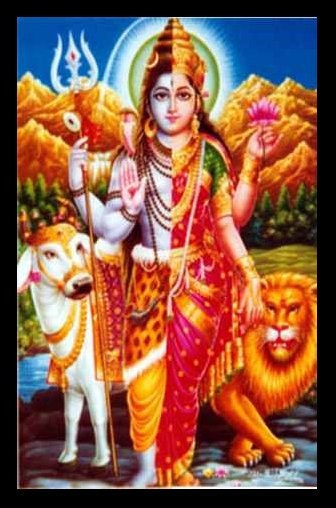

अर्धनारीश्वर-with-अखिलन्देश्वरी pulls in one aspect of genderqueerness into the mup pantheon and also ties into a larger theme in the entire religion. To butcher an interpretation I have heard of गते गते पारगते पारसंगते बोधि स्वाहा: "First you transcend the duality of male and female, then you transcend the duality of duality and nonduality, then you transcend transcendence, than you are enlightened."  अखिलन्देश्वरी, Nevernotbrokengoddess, ties into a thread running through mup. With silliness being placed as mup's central altered state of consciousness and the fundamental quality from which magic springs (instead of Will), mup work can often be seen as light and shallow, but that silliness is married in a not-entirely-causal manner to a deep love and worship of he less-than-pleasant bits of this immanently-divine world.  अखिलन्देश्वरी is the one who tells us that we are most powerful in the moments of our greatest despair, pain, and brokenness


Azathoth has to do with some of the existentialism inherent in mup. The idea is that if you trace any and every causal chain back, you find it eventually loops back on itself. All things are caused by their effects. Therefore, the causa causans, the primum mobile, the center of everything, must be the Blind Idiot God, the Nuclear Chaos.


Ἔρις holds down the link between silliness and the unpleasant very strongly. Also, Mommy wouldn't let me not include her.


Ἑρμαφρόδιτος holds down the "both" element of genderqueerness, as well as surprisingly challenging a lot of unrecognized beliefs. They also, of course, have elements of their parents running through their magick.
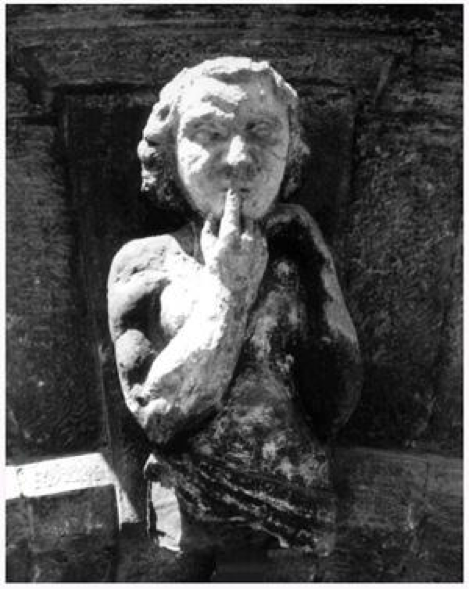

Ἁρποκράτης/Hoor-paar-kraat is the New Aeon, the Revolution, the Crowned and Conquering Child whose formula of power (replacing that of Sacrifice, held by the Dying and Reborn King) is Play.  Both he and Antinous, of course, are pueri aeterni.
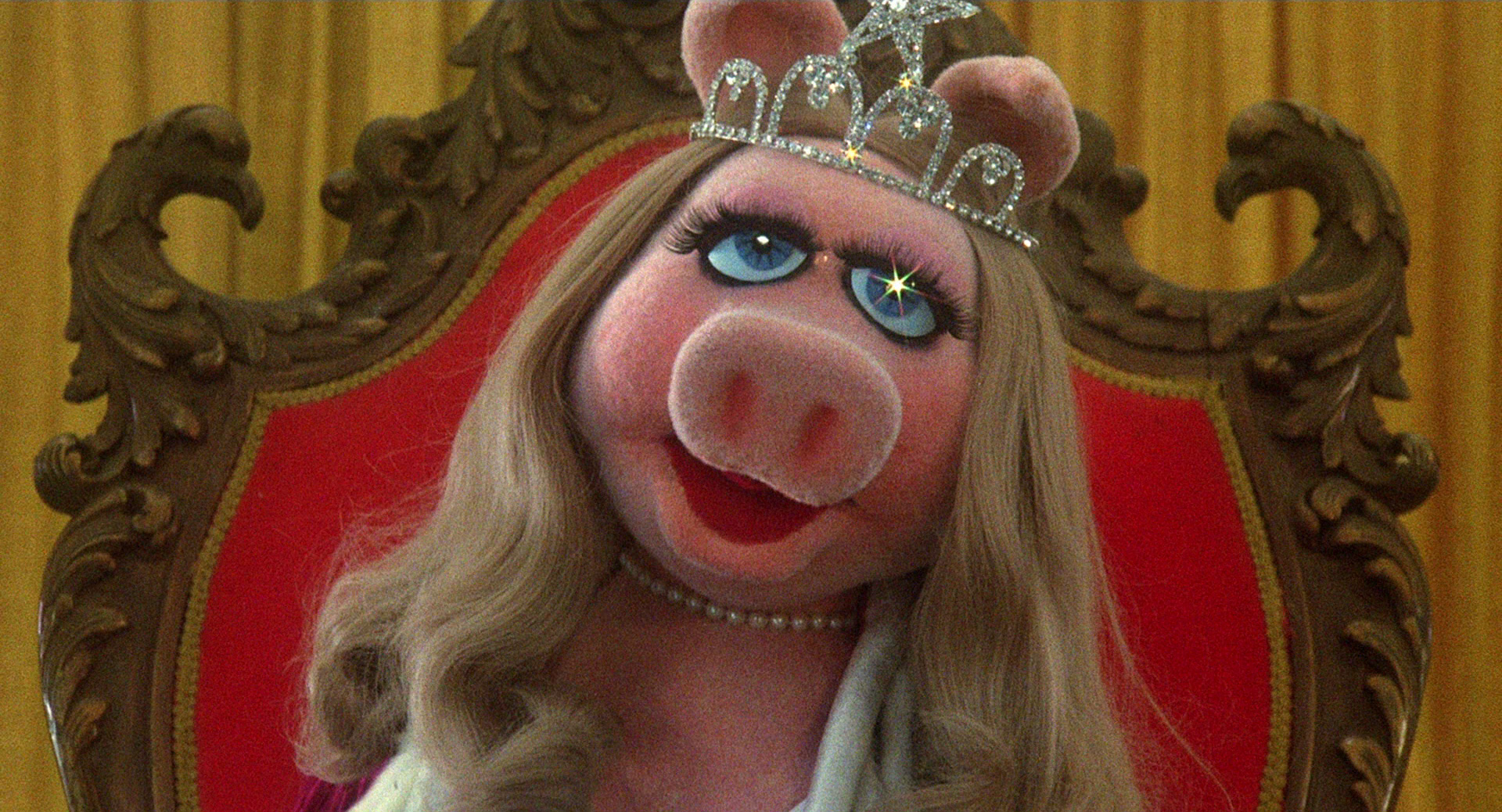


Inanna, of course, is Inanna, is sovereignty, is queen, is dignity and beauty and the Lady of Many Me. Genderqueers hold the magicks of many genders, and Inanna helps bring that in, along with a lot of third-gender/trans* magicks. She and her husband bring in the relationship between city and wild and so a lot of mup rewilding/anarcho-primitivism resides in the two of them. She's also kinky as fuck, Ninshubur's Domme and also turned on by Ereshkigal's meathook.

Inanna and the puer aeterni come together in the muppet's Black Heart of Innocence.


ملك طاووس, the Peacock Lord, is queer upon queer (two genderfluid twins acting as one, like two candles held so they have a single flame, which flame is ملك طاووس) and the height of the sacred sensual.


Pombagira, the Divine Whore, Gypsy Queen (matron of all outsiders, including trans* folk), Lady of the Seven Crossroads and of the Graveyard, is kind of an all-purpose deity in mup. if you want something, go to a trivia at midnight, play some Robert Johnson and wait for something weird to happen, which will tell you the price. Decide if you wanna pay and wait for another weird thing to happen: pay the price and make your request. Also, Maria Colomba is the one abused people turn to after they have left their situation of abuse to remember their beauty.
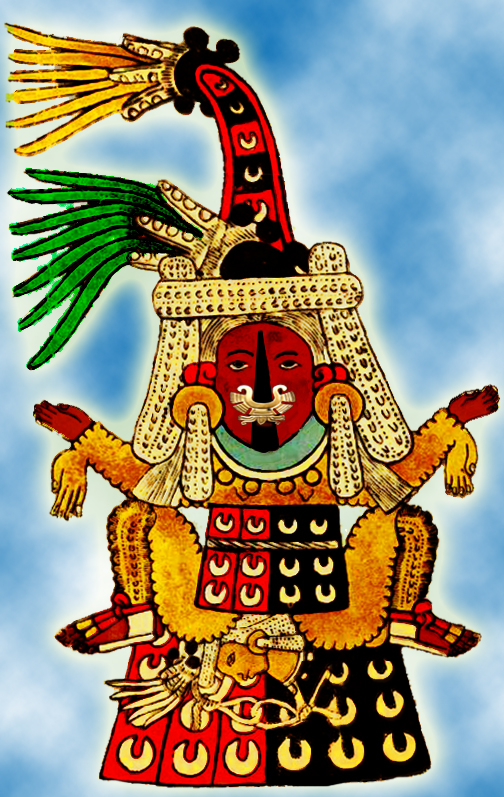

Tlazolteotl, "Shit Goddess", tells us that the disgusting and degrading and unpleasant is holy too. She contributes the idea of an ethics based on motion and the mup understanding of sacrifice.

Deep Reality is that which causes our experience; we can't talk meaningfully about it, but it seems to be one of the truest things I can say: "I seem to be experiencing things, and something is almost certainly causing it."

Lacuna . . . well, all I can tell you about Lacuna is what a lacuna is and that sometimes I don't say things, and those things are for Lacuna.

The saints of the name are parts of the soul, yours and not yours, one group for each name the muppet has. They live on the border of your Self and they are the agents of your magick, and they are also worthy of worship and cultus.

Finally, the Beast with Flowered Horns is the mup equivalent of salvation or nirvana or redemption or baraka -- what all this work is working towards and what we already are. The Beast is the muppet possessed by all the mup gods, standing in eir power, with the saints of eir name dancing and playing on eir skin. The Beast is the accidental, active, and mindful presence and participation in the experiencing of things. The Beast is a deity who is made up and the Beast explicitly charges us to make up our gods.

Friday, February 20, 2015

Accommodations and Accessibility

Can we talk about the difference between accommodation and accessibility for a moment?

Something has come up twice in the past week in VERY disparate contexts. For those people who may be reading this whose mouths spoke or fingers typed the comments to which I am responding; please know that this isn't about you. I respect you and I respect what you have done and are doing around these issues. I am somewhat venting and somewhat explaining my interpretations, views, and stances on this.

That thing which has occurred twice is that, when discussing the presence of ASL interpreters at an event (two dramatically different) events, I have heard comments or questions to the effect that interpreters will be required only if it is known in advance that D/deaf people will be attending.

Lez be fairy queer about this: that statement is accurate to the ADA and at least semi-reasonable for the lack of perfectly reliable predictive psychic powers among the populace. But lez also be fairy queer about this other thing: we don't only install the ramps when we know someone with a mobility issue will be coming to the event and then remove them afterwards.

The difference is that of accommodation v. accessibility. It is also the difference between friendship (individual and interpersonal) and hospitality (social and landscape-oriented). At a panel I attended at one of these events, Elena Rose and Dee Shull reframed the issue of gender inclusivity in a powerful way: that of hospitality. Considering that this was a pagan event -- and hospitality ranges from vital to central in many, if not most, paganisms -- this was an important reframe.

Accommodation, which might be renamed friendship, is when someone tells you that they need something, and you provide it. It is occasionally what we offer to people with sense disabilities -- D/deaf or blind people, for instance. Certainly, a lot of anti-bigotry work within and without oneself consists of this -- for example, not responding with "Not all men" when a woman or feminine/femme person is asking you for emotional support around the microaggressions they face everyday. Accommodation is terribly, truly, and deeply important, do not get me wrong.

However, it is important to remember that systemic problems (such as ableism) cannot be solved by individual solutions. That is where accessibility comes in. Accessibility is a state of being wherein the people of the oppressor class take on the work that has historically been the burden of the oppressed: to find ways for them to have access and safety. This is what is generally offered to people with mechanical disabilities -- mobility or fatigue issues, for example. We build the ramps and the resting spots at the proper distance and we generally make our spaces easier for them to navigate whether or not we know they will be there.

Note that neither accommodation nor accerssibility is often offered to people with cognitive or behavioral divergences.

Hospitality is what will end bigotry, prejudice, and discrimination, exactly BECAUSE it is landscape-oriented and passive on the part of the oppressed group. When D/deaf people have the safety of knowing that they will have access to what is being presented, without having to invest any energy or spend any spoons in doing or achieving that, only then will their level of interaction be at their decision, rather than ours as hearing people.

A lot of people seem to think that we should accomplish accommodations before we accomplish accessibility. It's certainly the principle the ADA was based upon. And it is true that accommodations require smaller actions, require less work on our part, then accessibility. Haven't we been told over and over that there is value in doing the easy part first so that we have the ability to focus when we tackle the hard stuff? If everyone is providing accommodations, then won't that be effectively the same as achieving accessibility? But if one is not hospitable, if one does not create a welcoming atmosphere around them and in their space, they will never be close enough to people to become friends with them. Three out of four white people in this country don't have any black friends. I assure you that most of those people have no intention of excluding black people from their social networks -- in fact, many of them will tell you that they wish they had black friends! -- but they have not put the effort into creating an environment where black people feel welcome in their lives. Accessibility, thus, breeds accommodations rather than the other way around.

The presence of ASL interpreters at an event is as non-negotiable to me as the presence of ramps and elevators in a building, regardless of what the ADA says. I am aware that it can be expensive, but the alternative is telling D/deaf people that they are not welcome here, and that is far more expensive in my accounting.

Thursday, February 19, 2015

A first note re: PantyCon

You know, frankly, I'm surprised that it's a surprise to so many white people that this entry was taken to be racist. I first learned about this when Jamie announced it at the Bringing Race to the Table panel, but I wasn't looking at her. I was looking at Crystal and Xochitl Lopez-Ramirez​'s faces. That told me all I needed to know. When I saw the text later, I saw exactly why it was so hurtful. Let me list the reasons:


  • Ironically enough, ironic racism turns out to still be racism and without even a punchline, the microaggressions themselves become the punchline. This ends up belittling the everyday lived and painful experience of people of color -- which isn't even ironic racism, it is just plain unadorned racism! 
  • Now, compare to the Cultural Appropriation joke-panel which has appeared in the PantyCon as long as I can remember. That one is obviously and clearly an exaggeration. Though I have seen people pop up espousing such views, explicitly endorsing cultural appropriation as a spiritual path (and somehow manage to have just barely enough respect for them for other reasons to not name them here), even my friends of color express shock and surprise at seeing their comments -- they are beyond the pale. However, the statements in the Ignoring Racism panel are things people say in all earnesty, seriousness, and sincerity ALL THE TIME. Hell, Monday of Con, 5 white people in the Staff Lounge attacked me as a supposed "racist" (news flash: "racism against whites" is a nonsensical concept) because I told one of them she was lying when she said she wasn't "going to do anything involving racism for like the next 20 months." That's not a joke, that's not satire, that's not humor. And neither was the PantyCon
  • It's triggering and only racism says it's okay to trigger Pagans of Color like that. 


I know I said I knew exactly, but that is almost certainly a lie -- I'm not a person of color, so I almost certainly missed something (and probably multiple of them!)

To PantyCon:
#sorrynotsorry but good intentions don't matter now. Having a person of color on your staff doesn't matter now. Saying, "But CoG started it" doesn't matter now. Pointing out that CoG needs to face their bullshit, while true, not only doesn't matter now, it is not mutually exclusive with you dealing with your bullshit.

Signed,
Frustrated White Pagan

Thursday, January 22, 2015

It appears that Απολλαντίνοος Μουσηγετης is pleased that I have joined PSVL's challenge and is shooting me with more of his arrows of inspiration!

I Respond to the Blind Men Who Have Seen the Indian Elephant
I tell you:
you have learned far more with fingers and palms
than would have been possible with eyes.
It is not always in broadness of vision that information breeds
and knowing that it is an elephant would have stopped you from seeing
for the elephant, big as it is and in the room as it is, is a distraction.
It is the pillar and the rope and the thick branch of a tree and the big hand fan and the huge wall and the solid pipe
who hold the wisdom -- the elephant is pointless and absurd.
For metaphor is not even how we understand Deep Reality:
it is but our Talking translation of Fetch’s image of Deep Reality.
Let your Deep Self, inscrutable foundation, deal with the elephant,
Let your Child Self, hungry door, deal with the image,
And let your Talker, busy chef, deal with the metaphor.
They will anyway.
And know that you create the world around you
and that knowing that world you create is far more valuable
than knowing that causa causans primum mobile that created the experiences which are why you created that world.
γνῶθι σεαυτόν και γνῶθι κοσμον και γνῶθι ὀτι ὁ κοσμος ἐστὶ ὁ σεαυτόν

Wednesday, January 21, 2015

The Mud Hymn of Ἀντίνοος

My friend PSVL, the ever-wonderful doctor ἐκκλησία Ἀντίνοου, has announced a poetry challenge for this new Gregorian year! I have let this blog idle for too many moons, and I am hoping that I can use this challenge to post at least one thing a month here, a foundation from which I can build a habit!

But, first, an update: On July 17, four days after my own dies natalis and the night after introducing my Sir to my Mxtr, I was assaulted by a homophobic and misogynistic roommate. A knife was briefly involved. No one got hurt, thankfully (that night; he has since gone on to terrorize a metamour of mine who still lives there), but I got myself the hell out. I was homeless for three weeks until I found an urban farm where I thought I might be able to make some sort of home for a while. That was whence I posted the Pentacle Prayer here in August. Sadly, that did not work out either, and after two months (and just a couple of days before I headed to Wolf Creek Radical Fairy Sanctuary for Samhain), I was homeless again.

I have been homeless for the past six months, trying to drum up business as a whore (and failing), pursuing California State Disability (slow, slow success), and dreaming of tending a temple. So if you know of anyone, anywhere, who has a little bit of space they could provide for a mup temple and its attendant monk, please let me know! All I would need was space for a tent for me to stay in and for the actual temple itself, which I could build on their land if they wished, or house in a shed, which could be (relatively) moved if I ever moved away, if that is what they want. OK, some financial assistance to get resources like possible building materials, furniture for the temple, statues, and ritual supplies might be rad, too, but isn't what I'm asking. I just need the space to live and work. My practice would be one of deep devotion, and my usual mix of intense religious study and spiritual experimentation. That's what you get when you find yourself as both a reconstructionist nerd AND a Discordian chaote! As a templekeeper, I would spend a lot of time maintaining the actual structure and contents of the temple, sweeping, cleaning, decorating, feeding and clothing the gods housed within, et cetera. As a monastic, I would be engaged in nine prayers a day, work/labor for its own sake (gardening, perhaps, or writing, or cleaning, cooking, fucking, et cetera -- I would happily dedicate that time to giving back to the land where I was staying, if so desired), and so on. The temple would ideally be open and available for anyone who needed it at any time and would hopefully be able to function as a (rather small, but functional) sanctuary for any passing muppets who might need it. My current financial status is spotty at best, so I would be unable to assure a regular monthly rent right now, but I would be happy to tithe from any donations the temple might receive, and am happy to do labor as well, and I am working on improving my situation (through hierodulic work, SSDI, etc.). The Temple, subject to appropriate divinations, is likely to house all of the mup deities, and I am happy to house also any deities or spirits my landlord might like.

So, do you know anyone who might be interested in subsidizing such a project?

Or maybe would you mind asking around to folk for me?


But, anyway! I said it was PSVL's challenge which brought me back to the blog, so here is January's poem for Ἀντίνοος (also, remember, my poetry is always alive and changing -- comments are welcome!).  I haven't yet figured out how to write in hieroglyphics in my text, which would be really nice.  Does anyone know how?

The Mud Hymn of Ἀντίνοος
"If the body is a text with its own narrative structure, what does it mean when it is written with excrement? . . . [N]umerous critics have pointed out that this ‘“abhorrence” of excrement is in no way “natural”’ but the result of culturally contingent socialization. . . . Excrement was a relic of ‘gay matter,’ ‘an intermediate between the living body and dead disintegrating matter that is being transformed into earth, into manure. The living body returns to the earth its excrement, which fertilizes the earth as does the body of the dead.’ Carnivalesque excrement functioned both as the material sign of abundance as well as humiliation; a magical medicine as well as corruption; renewal as well as death. Excremental images, understood in a richly complex way by contemporaries, have become coarse and debased as we have stripped them of their ambivalence."

Susan Signe Morrison, Excrement in the Late Middle Ages: Sacred Filth and Chaucer's Fecopoetics

The ashes in my mouth
struggle to turn into juice.
Recently,
they have begun to see some success
but that leaves my words muddy
and I still choke.

Beautiful boy,
when I walk, you walk.
Beautiful boy,
we needn’t do anything to make
these hands into your hands
these breaths into your breaths.
Beautiful boy,
my hands’ joy is already your joy,
my breaths’ work is already your work.
Beautiful boy,
whatever happens with this trinket dangling
between my legs,
or the hungry hole on the other side,
whatever graces these breasts
or this hungry hole above with glorious wetness,
is for you.
Couldn’t change it if the Caesar ordered me to;
I have made my choice.
And your Caesar would never ask.

I learned how time tasted when I turned thirty
-- like something dry and burned which only tastes bad halfway to something wet and sweet.
At thirty-two, I shattered, am shattering.
This was you
and this was for you,
O Crossroads of Many Gods.

Mind, free Heart.
Mind, stop making fun of Heart.
Mind, stop mocking em for what you make em do or rather not do.
Mind, what has Heart ever done to you?
Heart, why does Mind still you so?
Do you not beat with the convulsing of my lungs?
Is it arrhythmia,
milliseconds of Mind’s loneliness as you do not speak?
The two of you invited him here,
our meaty computer with skin-pleasure walls
rising to form a cottage
and hair smoke from our chimney.

The Νειλος at night, in October, is like glass
Hapi’s mirrored face
movement unseen below
weak above strong beneath

He plunged!
He plunged into us!
He plunged into us headlong!

The first god to arrive at the crossroads
dead living Asar!
dead living Asar!
Ὄσιραντίνοος floated to earth.
Ὄσιραντίνοος floated to the swampy bank.
Ὄσιραντίνοος floated to the city of He Who Never Is Still.
The second god to arrive at the crossroads.

The thick black mud came that year
more than ever before
more than ever since.
Praise the Beautiful Boy’s Beautiful Black Mud!
Rich it is and riches it brings
Hapi returns to eir skin
remembering eir breasts
remembering eir penis
The famine disappears
as all Khemet, as all Roma and the whole imperium
bend their chewing mouths
and eat their ground
We are what we eat.

I comfort myself with thoughts of alchemy.
Only motion is nourishing.
Dark juice from white ash.
Only the dead do not move.
But we plant our seeds in the dead.

This is what happens in the Middle Voice.
This is neither transit
ive nor intransit
ive, but reflex
ive.

This is what happens in the Middle Voice.
Mind is sneaky.
Heart is conspiratorial.
The gods need places to rest
for the world is large and needy and full of good friends to chat with.
Blessed by Epicurus are those who give the gods a moment’s peace!

Speech, pick on someone your own size.
Speech, you are louder than Flesh and Flesh has something to say.
I cannot hear.

This is what happens in the Middle Voice,
temples are quiet places to rest,
warm days are my breath,
a slight breeze is my eyes,
good food my knees
strong wine my Merlin-aged Kala urine
a fine cigar my beard
all the vices of juice and ash which taste so good

All for him,
all for them,
the all of them.
Not for me though I forget
and the forgetting is for them, for the all of them.
This unknown baby we have named for the ancient oath,
the giving of oneself as human sacrifice
reaped in battle
cooked in adrenaline
marinated in mud and blood
omnommed with teeth made of enemy’s blades
to ensure your side’s victory.
This we named the unknown baby: Devotion
and took em into our home,
decorated with fingernail stained glass windows.
This unknown baby whose parents are unknown.

This is what happens in the Middle Voice:
we raise the baby together in a life between the cracks.
Spiky brokenglass pieces of me into a loving rattle.

I am listening.
I am listening.
I am listening.
Desperately.

I give and I give and I give
and I receive and I receive and I receive.
It is nothing special.
It is the way we all are:
one hand giving mud pies to the other.
Subject and Object collapse.
I’m finally seeing some success
and I ain’t changing nothing
and Caesar isn’t asking.

Ianus opens his door of a mouth
tongue working at its dryness
My temple floor his tongue shakes as he coughs.
My body fingerpainted over with mud.

Thursday, August 28, 2014

My Pentacle Prayer of the Moment

I feel in need of strong magick right now, so I'm casting some.  I know the need is great because I am right now trying to convince myself that I am making a mountain out of a molehill.  Minimizing my emotions and scenarios is a common sign that I am in a serious situation.  Or, you know, not.  Fucked if I know.

This prayer utilizes the Iron and Pearl Pentacles of the F(a)eri(e) and Reclaiming (and other) traditions of witchcraft for its structure.  Also included is the Plastic Pentacle of mup, as well as the mup pantheon and some nonhuman spirit magicks that I am thinking I might carry.

Standing in my Great Horned Owl magick, standing with Azathoth, Inanna, and Lacuna, I throw open the gate at my right hand to the awkward force of Power/Liberty/Uncertainty/Power, which is already blowing the door from its hinges:

I am filled with gratitude for not knowing how to proceed.  Unbound by the chains of the past, untied from the ropes of the illusion that is prior knowledge and the knots of habitual action, I remind myself that I am free to do as I wish and to grow in what direction I will.  Wondrous, oh!  Wondrous it is that can act from will, unfettered by what has come before.

Standing in my Garlic magick, standing with Pombagira, Hoor-paar-kraat, and Melek Taus, I throw open the gate at my right foot to the roiling force of Pride/Law/Vulnerability/Pride, which is already blowing the door from its hinges:

I ask myself and all who will listen how I can depen my vulnerability in this moment and all moments.  How do I open my crab shell to reveal the tenderest parts of me?  What must I do to offer them, quivering, to those people who matter to me, saying, "Here, it is a gift, for you.  Do with it as you will"?  In what way do I welcome, even invite, the pain?  With what words and colors, in what font and on what paper?  How do I dance with my pain and my fear and my shame, that they might remain ever fluid, gracefull, motionfull instead of solid, unmoving, safe?

Standing in my Tomato magick, standing with Ardhanarishvara, Hermaphroditos, and Deep Reality, I throw open the gate at my left foot to the frightening force of Passion/Wisdom/Wonder/Passion, which is already blowing the door from its hinges:

I summon my heart, that part of me that moves and wants.  I call it to the surface, call it to be seen and here, call it to lead me and to drive my actions with the blazing warmth of its fuel.  May it stir me up, that I may never stop struggling for my own ecstatic joy.  I dance in right relationship with desire in every moment.

Standing in my Skunk magick, standing with Eris, Tlazolteotl, and all the saints of my name, I throw open the gate at my left foot to the buffeting force of Self/Knowledge/Doubt/Self, which is already blowing the door from its hinges:

I trust myself.  I don't trust myself.  Queerly resolving this duality -- gate gate para gate parasam gate bodhi svaha -- I see their fractious union.  I am learning how to grow in what direction I will and I am staying present in that journey, undistracted by goal, unassuaged of purpose.  I deliver myself from the lust of result.

Standing in my Honeybee magick, standing with Antinous and the Beast with Flowered Horns, I throw open the gate at my head to the silly force of Sex/Love/Play/Sex, which is already blowing the door from its hinges:

Keeping a temple flows from keeping the temple keeper and only dust grows in a walled away garden.  Sex is not sex when it is easy.  Love is not love when it is easy.  Play is not play when it is easy.  I let this difficulty spark my eyes and wet my pants and lift my trinkets.  I give myself to its tides and meet it with my own enthusiastic and reciprocal actions.

Haec est unde, haec est unde, haec est unde uita uenit.  Haec est unde, haec est unde, haec est unde uita uenit.  Haec est, haec est, haec est uita uenit!

Saturday, June 21, 2014

First blush idea of what a muppet hieromonk's day might look like

Quoting <a href="https://en.wikipedia.org/wiki/Rule_of_Saint_Benedict">Wikipedia</a> is dangerous, I know (even if it is the only word I know of which marries Hawai'ian and Greek roots to mean "quick education"), but here we go:

"Traditionally, the daily life of the Benedictine revolved around the eight canonical hours. The monastic timetable or Horarium would begin at midnight with the service, or "office", of Matins (today also called the Office of Readings), followed by the morning office of Lauds at 3am. Before the advent of wax candles in the 14th century, this office was said in the dark or with minimal lighting; and monks were expected to memorise everything. These services could be very long, sometimes lasting till dawn, but usually consisted of a chant, three antiphons, three psalms, and three lessons, along with celebrations of any local saints' days. Afterwards the monks would retire for a few hours of sleep and then rise at 6am to wash and attend the office of Prime. They then gathered in Chapter to receive instructions for the day and to attend to any judicial business. Then came private Mass or spiritual reading or work until 9am when the office of Terce was said, and then High Mass. At noon came the office of Sext and the midday meal. After a brief period of communal recreation, the monk could retire to rest until the office of None at 3pm. This was followed by farming and housekeeping work until after twilight, the evening prayer of Vespers at 6pm, then the night prayer of Compline at 9pm, and off to blessed bed before beginning the cycle again. In modern times, this timetable is often changed to accommodate any apostolate outside the monastic enclosure (e.g. the running of a school or parish)."

Meanwhile, <a href="http://tlacatecco.com/2008/10/15/daily-priestly-offerings-of-incense/">Cehualli</a> points out:

"Copal was burned for the Teteo almost constantly in the temples. Sahagun records in Book 2 of the Florentine Codex that the priests would offer incense nine times each day. Four of these times fell during the day, five came at night. The four during the day were when then sun first appeared, at breakfast, at noon, and when the sun was setting. The five times at night were when the sun had fully set, at bedtime, when the conch shell trumpets were blown, at midnight, and shortly before dawn."

These two have given me the first blush of an idea of what a hieromonastic temple-keeping day might look like:

**Midnight ("Matins"):  app. 15-minute prayer to <a href="http://muppetbookofdays.blogspot.com/2014/02/what-hell-is-this.html">one of the mup gods</a> (still werqing out who goes where)
**Sleep
**Shortly before dawn ("Lauds"):  app. 15-minute prayer to one of the mup gods
**This is probably a good time for non-deity-centered daily practice, which I get largely from Andersonian F(a)eri(e) (kala, running pentacles, aligning the three souls, Flower Prayer, Ha Prayer), though things like meditation/zazen/sitting practice would also fit well here.
**Dawn ("Prime"): app. 15-minute prayer to one of the mup gods
**Private magick or spiritual reading or work of some sort
**Breakfast ("Terce"):  app. 15-minute prayer EACH to two of the mup gods
**Celebration of <a href="https://www.google.com/calendar/embed?src=3s0mps1v5f9f3tguuosfmafn40%40group.calendar.google.com&ctz=America/Los_Angeles">appropriate specific holy days</a> and/or rest/free time.
**Noon ("Sext"):  app. 15-minute prayer EACH to two of the mup gods.
**Lunch
**Farming and housekeeping work.
**Sunset ("None"):  app. 15-minute prayer EACH to two of the mup gods.
**This is probably a good time for non-deity-centered daily practice, which I get largely from Andersonian F(a)eri(e) (kala, running pentacles, aligning the three souls, Flower Prayer, Ha Prayer), though things like meditation/zazen/sitting practice would also fit well here.
**Full Dark ("Vespers"):  app. 15-minute prayer EACH to two of the mup gods.
**Rest/free time.
**Bedtime ("Compline"):  app. 15-minute prayer EACH to two of the mup gods.
**Sleep
**22:00 ("Quiquiztli"):  app. 15-minute prayer to one of the mup gods.

It's just a thought, a first vagary of an idea that leaves out a few things -- rather important such as the need to react to community if ever anyone shows up unexpectedly, or the fact that my monasticism is not a renunciatory path (immanent divinity, remember, not transcendent) and so there will be a pull to go to outside events, or the multitude of traditions I am drawing from that I haven't included here.

But it's a start.